

A Silent Transition That Seems Greater Than Technology
It’s not loud, yet something significant is taking place. No grandiose press conferences. No science fiction gimmicks. But the earth is shifting. Chinese producers of humanoid robots are entering the international arena with devices that do more than simply look good.

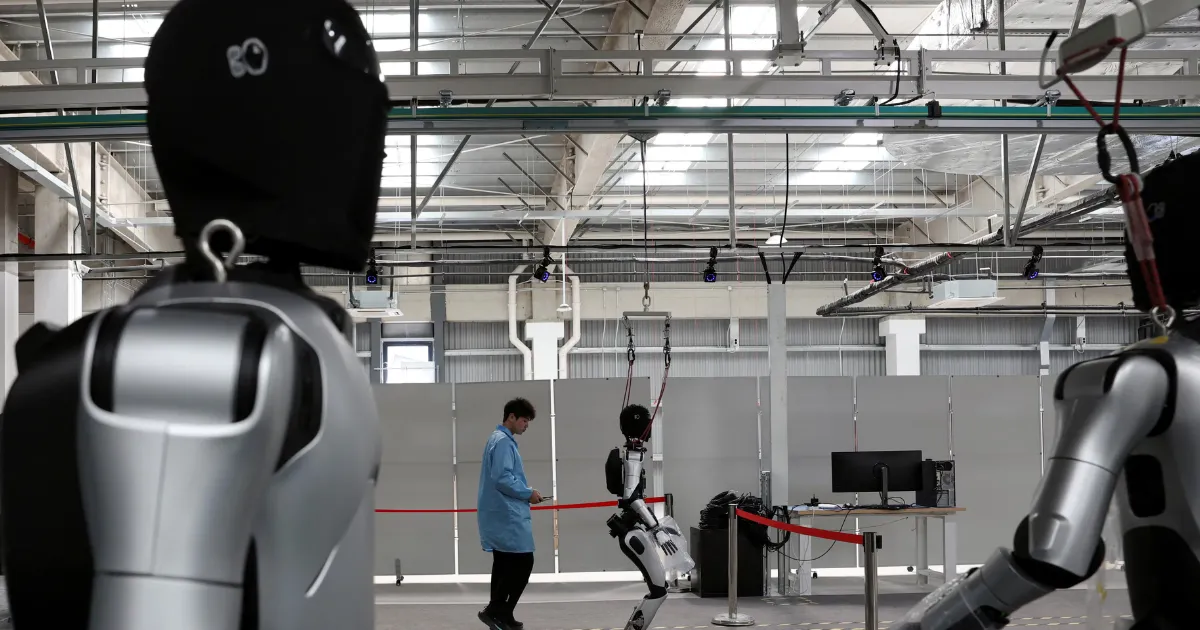
Copying is no longer the point of this. The goal is to compete. And redefining expectations in some places.
The story of humanoid robotics was dominated for years by the United States. An image of unquestionable leadership was produced by innovation centers, prestigious research facilities, and billion-dollar investments. However, the most recent generation of Chinese humanoid robots presents a different picture, one that is molded by scale, speed, and unrelenting repetition.
What Sets Apart the Most Recent Chinese Humanoid Robots?
These new models are not toys used for experimentation. They are systems that are specifically made to move, lift, watch, learn, and engage in real-world situations.
At Last, Mature Hardware
Energy economy, joint flexibility, and balance control have all seen noticeable improvements thanks to Chinese producers. They move more fluidly. There are fewer falls. The battery lasts longer. The robots seem more deliberate and less robotic.
Faster-Learning AI
The combination of large-scale training data with on-device AI is what really makes a difference. Without constant human tuning, these robots improve task execution through rapid adaptation. Learning curves are getting smaller for jobs ranging from warehouse work to supported inspection.
Using Cost as a Strategic Weapon
Pricing is arguably the most disruptive factor. Without compromising essential features, Chinese humanoid robots are hitting the market at far lower prices than similar US counterparts. That instantly alters the calculus of adoption.
Why the United States Can No Long Ignore This
This competition is not symbolic. It’s financial. Industrial humanoid robots have the potential to revolutionize manufacturing, logistics, elder care, and dangerous jobs.
Robots that are scalable and less expensive can be deployed more quickly. Data results from faster deployment. Improvement is driven by data. Dominance is fueled by improvement.
That loop has already begun to build.
China is strong in execution, including quick prototyping, manufacturing integration, and large-scale real-world testing, while the US continues to lead in foundational research and software depth. It is a distinct strategy. It’s also effective.
Most Analysts Ignore the Emotional Undercurrent
This change is motivated by a human emotion: urgency.
Chinese robotics teams are developing with a feeling of both national and international significance. These devices are statements rather than merely goods. Evidence that advanced embodied AI is not limited by geography.
This is a difficult but crucial moment for American entrepreneurs. Progress is sharpened by competition.
Humanoid Robotics’ Future Prospects
A robot war is not about to begin. Acceleration is just starting.
Who controls ecosystems, norms, and trust in the deployment of humanoids will probably be determined over the course of the next 24 months. Ethical design, regulation, and teamwork will be just as important as performance alone.
One thing is certain: Chinese manufacturers of humanoid robots are no longer merely observing.
They are now in the arena. The race simply came to pass.


I am a content creator/ Digital Marketor.