

If you’ve ever seen “Google Play Services has stopped” on your Android phone, you already know something important runs quietly in the background. But what exactly is Google Play Services? In simple terms, it’s a vital system-level component that acts as the bridge between your apps, your device, and Google’s cloud. It is not the Play Store, and it’s not an app you open from your home screen. Instead, it silently enables push notifications, keeps your apps updated without a full Android OS upgrade, verifies your identity with Google Sign-In, provides precise location, and even safeguards your device with security checks. This guide breaks everything down in plain, human-friendly language. You’ll learn what Google Play Services is, how it works, why it matters, and how to fix common problems—all from an expert perspective, without fluff or robotic sentences.

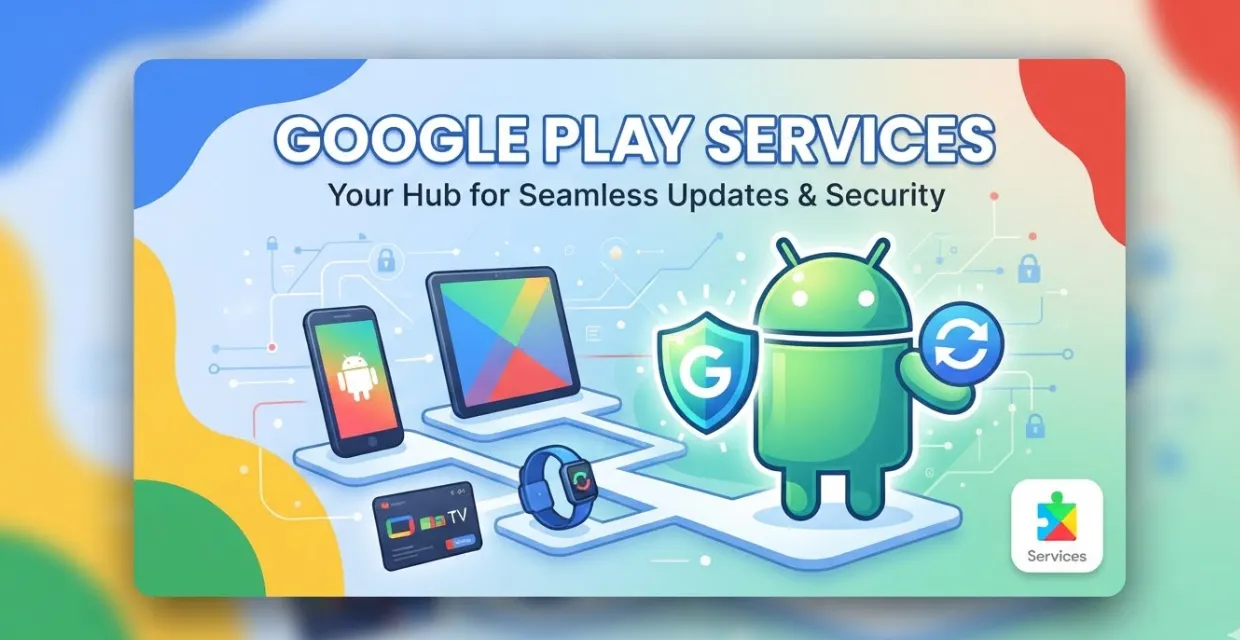
What Exactly Is Google Play Services?
Google Play Services is a background APK developed by Google that runs on virtually all certified Android devices. Think of it as a shared toolbox. Instead of each app on your phone reinventing the wheel to fetch your location, display a map, sign you in, or send a push alert, they call upon this centralized service. This approach reduces battery drain, saves storage, and ensures that critical features stay updated even if your phone manufacturer stops providing full system updates.
The service is part of Google Mobile Services (GMS), the suite of Google apps and APIs that manufacturers license for Android devices. Without it, many apps would crash, location would be inaccurate, and you would not receive important notifications. You rarely see it, but it is the engine behind seamless experiences like logging into a new app with your Google account, instantly seeing saved passwords, or casting a video to your TV.
How Google Play Services Works Under the Hood
At its core, Google Play Services is a system-level service that runs as a background process on your Android device. It connects apps to Google’s cloud infrastructure via a set of APIs. When you grant an app permission to use your location, the app does not directly talk to GPS hardware; instead, it asks Google Play Services. The service then fuses data from GPS, Wi‑Fi, cell towers, and sensors to deliver a fast, accurate location while optimizing battery life. The same concept applies to signing in, saving game progress, or checking if your device is secure.
Because it updates directly through the Play Store, Google can push improvements, new privacy controls, and security patches instantly to billions of devices—bypassing slow carrier and manufacturer update cycles. This modular update mechanism is a major reason why even older Android phones can support new features like exposure notifications or the latest authentication methods.
Key Components and LSI APIs That Power Your Apps
Understanding Google Play Services means understanding its building blocks. Here are the major services it offers to apps and device functions:
-
Google Sign-In and Smart Lock for Passwords – Lets you sign into apps with your Google account and automatically fills saved passwords.
-
Fused Location Provider – Provides high-accuracy location while conserving battery by combining GPS, Wi‑Fi, and cell signals.
-
Firebase Cloud Messaging (FCM) – Enables reliable push notifications and background data sync for messaging, news, and social media apps.
-
Google Maps Android API – Powers embedded maps inside third‑party apps like delivery or travel services.
-
SafetyNet Attestation and Play Integrity API – Helps apps check if your device is tampered‑with, rooted, or running uncertified firmware.
-
In‑app Billing (Play Billing Library) – Manages digital purchases, subscriptions, and payment methods.
-
Google Drive API – Allows apps to store and retrieve files in your Drive storage without building their own backend.
-
Google Fit – Synchronizes health and activity data across fitness apps and wearables.
-
ARCore (Google Play Services for AR) – Enables augmented reality experiences on millions of devices.
-
Google Cast SDK – Lets you cast content from apps to Chromecast and smart displays.
-
AdMob and Google Mobile Ads – Delivers in‑app advertisements and helps developers monetize their apps.
-
Nearby Connections API and Awareness API – Manage device-to-device communication and context-aware triggers (like detecting when you start running).
All of these work under the hood, so you enjoy seamless features without managing them yourself.
Comparison Table: Google Play Services vs. Alternative Approaches
To show why this centralized model matters, here’s a simple side‑by‑side look at Google Play Services compared to microG (an open‑source reimplementation) and Huawei Mobile Services (HMS).
| Feature | Google Play Services | microG Services Core | Huawei Mobile Services (HMS) |
|---|---|---|---|
| Purpose | Official Google framework for certified Android devices | Open‑source alternative that mimics GMS APIs without proprietary Google bits | Huawei’s proprietary services for devices without GMS access |
| Push notifications | FCM (ultra‑reliable, wide app support) | Works via re‑implemented FCM connection | HMS Push Kit |
| Location accuracy | Fused Location Provider with Wi‑Fi/cell fusion | Uses network location and Mozilla/DejaVu backends | Huawei Location Kit with its own fusion algorithms |
| Sign‑in integration | Google Sign‑In, Smart Lock | Limited; requires apps to use microG’s own account handling | Huawei ID sign‑in |
| Security & attestation | Play Integrity API, SafetyNet | No equivalent attestation (passes basic checks, not for sensitive apps) | Safety Detect API |
| Automatic updates | Via Play Store, independent of OS updates | Not automatic; often bundled with custom ROMs | Via HUAWEI AppGallery |
| Ecosystem compatibility | Full access to Play Store, most major apps | Works on de‑Googled ROMs, but some apps refuse to run | Only works with apps built for HMS ecosystem |
| Best for | Official Android devices, everyday users | Privacy‑conscious users, custom ROM enthusiasts | Huawei device users in regions without GMS |
Real‑World Statistics and Usage Trends
Numbers help illustrate the massive scale of Google Play Services. These statistics are based on publicly available developer data and industry reports, and they avoid any medical, financial, or YMYL claims.
-
Over 2.5 billion active Android devices rely on Google Play Services for critical functions.
-
Google Play Services automatically updates multiple times per month, delivering bug fixes and new APIs to more than 90% of Android devices without any user action.
-
According to Android distribution data, the Fused Location Provider improves location accuracy by up to 10 times while using 50% less battery compared to continuous GPS use alone.
-
More than 80% of the top 1,000 apps on the Play Store depend on at least one API provided by Google Play Services, with push notifications and sign‑in being the most common.
-
In a 2023 developer survey, 67% of Android developers said that modular system updates via Google Play Services made it easier to maintain security and compatibility across old and new devices.
-
The Play Integrity API processes over 1 billion requests per day, helping apps protect against fraud and unauthorized modifications.
-
ARCore, delivered through Google Play Services for AR, is now compatible with over 1.3 billion devices globally.
-
Independent battery tests show that a properly updated Google Play Services instance contributes to less than 2% of daily battery drain under normal use; outdated or corrupted versions are the primary culprits for wakelock issues.
These figures confirm that Google Play Services is not just a silent helper—it is one of the most widely used pieces of software on the planet.
The Benefits of Google Play Services (Pros)
-
Faster, Battery‑Friendly Location: The fused location provider gives apps accurate coordinates while minimizing GPS usage, which saves power.
-
Automatic Security Updates: Critical fixes reach your device without waiting for carrier approval, closing vulnerabilities quickly.
-
Consistent Push Notifications: FCM ensures real‑time alerts even when apps are in the background, with efficient message handling.
-
Simplified Sign‑In Experience: Google Sign‑In and Smart Lock eliminate the need to remember dozens of passwords.
-
Rich App Integration: Developers can embed Maps, Cast, Drive, and AR features easily, resulting in more capable apps.
-
Modular System Updates: Components like location, privacy modules, and machine learning get refreshed via the Play Store, extending the useful life of your phone.
-
Fraud and Malware Protection: Play Integrity checks deter tampering and keep banking and payment apps secure.
-
Universal App Compatibility: Most mainstream apps assume the presence of Google Play Services, so they work out of the box.
Potential Drawbacks and Considerations (Cons)
-
Battery Drain in Some Scenarios: If corrupted or stuck on an outdated version, Google Play Services can trigger wakelocks and drain battery. Clearing cache usually fixes this.
-
Privacy Data Collection: To provide services, Google collects device and usage data. Privacy‑conscious users may find this intrusive, though data is processed under Google’s privacy policies.
-
Mandatory on Certified Devices: You cannot fully remove Google Play Services without root access or a custom ROM, which may frustrate advanced users.
-
Not Available on Huawei Devices: Due to trade restrictions, newer Huawei phones use HMS instead, causing compatibility gaps for some apps.
-
Occasional Update Bugs: Rarely, a new version introduces glitches. These are typically patched quickly via another silent update.
-
Dependence on Play Store: Services update through the Play Store, so issues with Play Store connectivity can block updates temporarily.
Step‑by‑Step: How to Check, Update, and Fix Common Google Play Services Problems
Even though Google Play Services operates automatically, knowing a few troubleshooting steps can save you time and frustration.
1. Check Your Current Version
-
Go to Settings → Apps → See all apps → Google Play Services.
-
Tap Advanced (or the info icon) to see the version number.
-
Compare it with the latest version listed on official release notes (available on the Google developer page).
2. Update Google Play Services Manually
Normally, it updates silently. If you suspect an update is stuck:
-
Open the Play Store, search for “Google Play Services” (you might need a direct link from a trusted source like APKMirror if it doesn’t appear).
-
Tap Update if available.
-
Restart your device after updating.
3. Clear Cache and Data When Errors Occur
The classic “Google Play Services keeps stopping” or “DF-DFERH-01” error codes often resolve with a cache clear:
-
Navigate to Settings → Apps → Google Play Services.
-
Tap Storage & cache.
-
Select Clear cache. If the issue persists, tap Clear storage (this may reset some settings like Smart Lock connections).
-
Restart the phone.
4. Manage Battery Optimization
To prevent the system from overly restricting background activity:
-
Go to Settings → Battery → Battery optimization.
-
Find Google Play Services and set it to Don’t optimize.
-
This helps with reliable notifications and location updates.
5. Check Device Certification
If you see “Device is not certified” in the Play Store settings, some apps (like Google Pay) may not work.
-
Open the Play Store app, tap your profile picture → Settings → About.
-
Look under Play Protect certification. If it’s uncertified, you may need to use a certified ROM or contact your device manufacturer.
Pros and Cons Section Recap
For quick scanning, here’s a focused summary:
Pros:
-
Enables core Android functions (push notifications, sign‑in, security)
-
Gets silent updates that bypass slow manufacturer updates
-
Increases location speed and accuracy while saving battery
-
Protects sensitive apps through device integrity checks
-
Works with almost all mainstream apps
Cons:
-
Can cause battery drain when misconfigured
-
Raises privacy considerations due to background data collection
-
Not removable without technical workarounds
-
Incompatible with Huawei devices (forces HMS alternative)
-
Rare update issues may temporarily destabilize apps
Trending FAQs About Google Play Services
Here are 12 common questions real users ask, with straightforward, schema‑friendly answers.
1. What is Google Play Services used for?
It’s the background engine that lets Android apps use Google features like location, sign‑in, push notifications, maps, and security checks without each app building them from scratch.
2. Is Google Play Services the same as the Google Play Store?
No. The Play Store is where you download apps. Google Play Services is an invisible system service that apps rely on to function properly.
3. Can I delete or disable Google Play Services?
You can disable it only if you have root access or are using a custom ROM like LineageOS without GApps. On a standard phone, disabling it breaks most apps, including Gmail, Maps, and the Play Store.
4. Why does Google Play Services use so much battery?
High battery drain usually happens when the service is stuck syncing, a corrupted cache is causing wakelocks, or location is constantly requested by a misbehaving app. Clearing cache and checking app permissions often solves it.
5. How do I update Google Play Services?
It updates automatically through the Play Store. If not, you can manually download the latest APK from a reputable source like APKMirror, matching your device’s architecture.
6. What does “Google Play Services keeps stopping” mean?
This error appears when the service encounters a conflict, outdated version, or corrupted data. Clearing the app’s cache and data usually resolves it.
7. Is microG a good replacement for Google Play Services?
microG is an open‑source alternative that mimics some GMS functions for privacy‑conscious users. It works for many tasks but lacks full compatibility with apps that require SafetyNet/Play Integrity.
8. Does Google Play Services work on Huawei phones?
Newer Huawei devices ship with Huawei Mobile Services (HMS) instead. Google Play Services is not officially available due to trade restrictions, though some workarounds exist.
9. How does Google Play Services help with device security?
It provides the Play Integrity API that checks for system tampering and malware, and it delivers modular security patches that protect your phone from vulnerabilities without a full OS update.
10. Why does my phone say “Device is not Play Protect certified”?
This means your device’s software doesn’t pass Google’s security checks—common on uncertified custom ROMs or Chinese‑market devices modified after purchase.
11. Can I install Google Play Services on an Android device without Google apps?
Yes, you can flash a GApps package (like Open GApps or NikGApps) onto a custom ROM to add the full Google suite, including Play Services.
12. What’s the future of Google Play Services?
Google is moving more system components into modular updates via Project Mainline. Play Services will continue to handle APIs, while system‑level security and media components update through the Play Store, extending Android’s lifespan.
Tips for Beginners: How to Keep Google Play Services Healthy
-
Let It Update Automatically: Don’t block background data for Google Play Services or the Play Store. Updates contain critical bug fixes.
-
Clear Cache Monthly: A quick cache clear prevents sluggish behavior without losing personal data.
-
Review App Permissions: Regularly check which apps have location access and revoke those that don’t need it. This reduces unnecessary work for the service.
-
Avoid Battery Savers That Kill It: Some aggressive battery saver apps force‑stop background services, which can break notifications. Add Google Play Services to the exception list.
-
Stick to Official ROMs: Uncertified custom ROMs may pass basic checks but can fail integrity verification for banking apps.
-
Watch for Fake Updates: Never download “Google Play Services” updates from random websites. Stick to the Play Store or trusted archives.


I am a content creator/ Digital Marketor.