

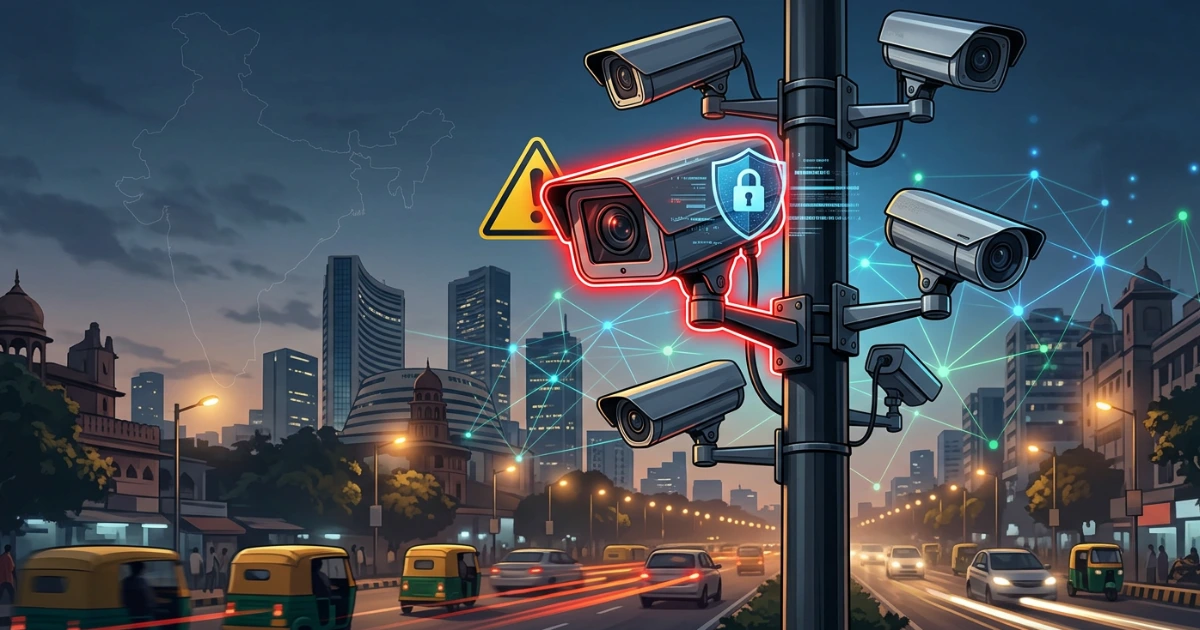
India’s latest tech crackdown has sent shockwaves through the security industry. The government’s decision to ban Chinese CCTV cameras isn’t just about privacy—it’s about sovereignty, trust, and control in a digital age shaped by invisible threats.

A Silent Eye No More
For years, Chinese-made CCTV systems quietly guarded Indian streets, offices, and even defense zones. They were cheap, accessible, and everywhere. But behind the lens lurked an uneasy question—who else is watching?
After multiple reports suggested potential data leaks and vulnerabilities linked to Chinese surveillance hardware, policymakers began taking a hard look. The result: an assertive national ban aimed at reclaiming control over sensitive security networks.
What Sparked the Ban?
According to senior officials, the decision followed intelligence inputs on data routing and remote access issues. With Beijing-linked companies dominating the low-cost surveillance market, India’s dependence became a national security concern.
The government’s directive now pushes agencies and private sectors to phase out Chinese surveillance products, favoring indigenous and allied alternatives that meet stricter cybersecurity benchmarks.
Beyond Security: A Signal to the World
This isn’t just a ban—it’s a statement of intent. India is signaling its readiness to prioritize strategic autonomy over convenience. In an era where hardware equals data access, protecting physical infrastructure is as critical as defending digital borders.
Experts see this as part of India’s broader “trusted tech” policy—encouraging local manufacturing under “Make in India” while weeding out unreliable systems from critical networks.
Why This Matters Now
The timing isn’t accidental. With global tensions surrounding supply chains, Beijing’s influence in telecom, and concerns about spyware and data theft, governments worldwide are rethinking what “secure” really means.
For ordinary citizens, it’s a reminder that security isn’t just about what we can see—it’s also about who can see us. For Indian tech players, it’s an open door to design smarter, safer alternatives that could define the country’s next digital leap.
The Road Ahead
Yes, phasing out millions of units won’t be easy. It will strain budgets, disrupt vendors, and demand massive upgrades. But it could also ignite a tech renaissance—one where Indian innovation takes center stage, and trust becomes the ultimate product.
A Defining Moment
India’s CCTV ban is more than policy—it’s a declaration of confidence. It says: we’ll shape our own security future, on our terms.
And in a world watched by unseen cameras, that’s an act of quiet power.


I am a content creator/ Digital Marketor.