

The ute market is evolving more quickly than anyone anticipated.
Suddenly, it’s not just about power—it’s about how far you can travel on less fuel.

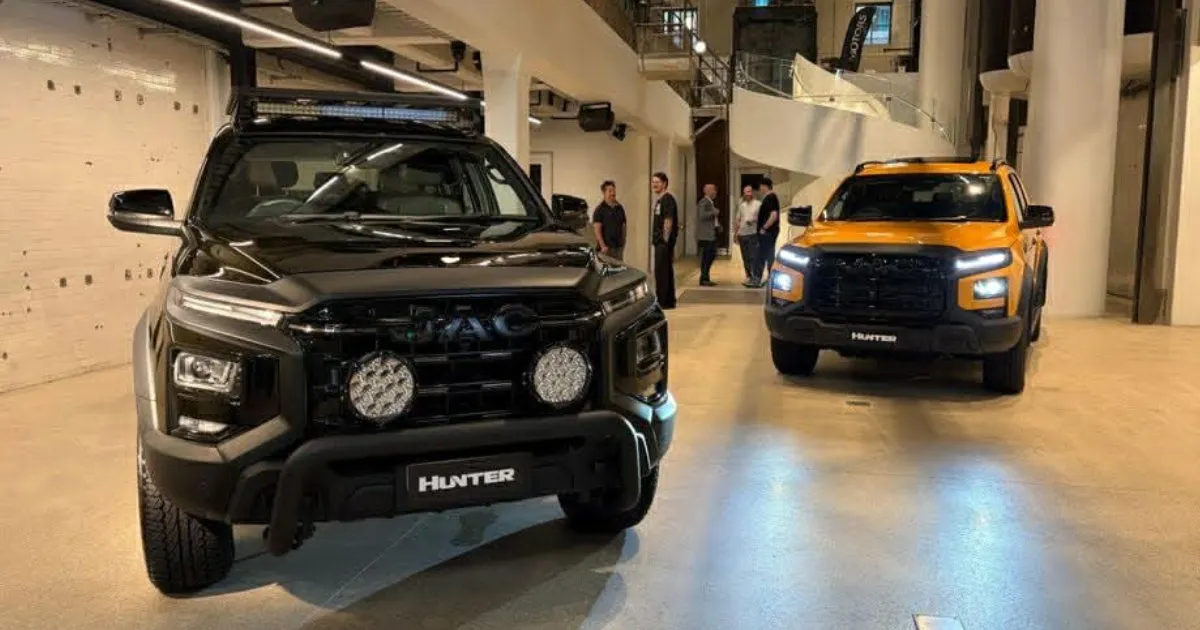
A new competitor has entered the scene. The JAC Hunter PHEV isn’t just another pickup—it’s going straight after the BYD Shark 6 with bold claims that could reshape the segment.
A New Rivalry in the Electrified Ute Space
For years, utes were defined by diesel engines and brute strength. Efficiency rarely entered the conversation.
That story is now changing.
The BYD Shark 6 made headlines as one of the first serious plug-in hybrid utes. It promised a blend of electric driving and traditional capability.
Now, the JAC Hunter PHEV arrives with a clear message: it can go further—and do it smarter.
What Distinguishes the JAC Hunter PHEV?
Greater Efficiency and Range
JAC claims the Hunter PHEV will outperform key competitors like the Shark 6 in both fuel economy and driving range.
While full real-world figures are still being evaluated, early indications suggest:
- Greater combined driving range
- Improved hybrid energy management
- Reduced fuel consumption in mixed driving conditions
That combination matters more than ever.
Modern drivers want flexibility between electric and petrol power, fewer fuel stops, and lower running costs. The Hunter appears built with exactly that in mind.
Designed for Practical Use
This isn’t just about numbers.
The Hunter PHEV remains a true utility vehicle, designed for towing, hauling, and off-road performance. That’s where many electrified pickups struggle to win over traditional buyers.
JAC seems to be addressing that directly:
- Practical load capacity
- Competitive towing capability
- Rugged design with modern technology
It’s a careful balance between innovation and familiarity.
BYD Shark 6: Still a Formidable Competitor
A Strong Head Start
The BYD Shark 6 isn’t being replaced—it’s being challenged.
BYD has already built momentum with its electrification strategy. The Shark 6 benefits from:
- Proven battery expertise
- Strong hybrid integration
- Early market entry
This first-mover advantage gives it real credibility.
Where the Pressure Builds
Competition changes expectations.
If the JAC Hunter PHEV delivers better range and fuel efficiency, buyers may begin asking tougher questions:
- Why settle for less range?
- Can efficiency redefine what a ute should be?
This is where the real battle begins—not in specifications, but in perception.
Why This Matters Now
The timing is critical.
Global demand for electrified vehicles is evolving. While full EV adoption is slowing in some regions, plug-in hybrids are gaining traction as a practical middle ground.
Utes, in particular, are under pressure to:
- Reduce emissions
- Maintain performance
- Stay affordable
The JAC Hunter PHEV vs BYD Shark 6 rivalry reflects a much larger shift in the automotive industry.
It’s no longer about whether utes will electrify—it’s about who will do it best.
The Bigger Picture: A Smarter Future for Utes
This competition represents more than just two vehicles going head-to-head.
It shows how manufacturers are rethinking utility vehicles:
- Efficiency is becoming a core feature, not a bonus
- Range anxiety is being addressed through hybrid flexibility
- Buyers now have more choice than ever
And that changes everything.
Final Thoughts: More Than Just a Spec Battle
The JAC Hunter PHEV isn’t just challenging the BYD Shark 6—it’s redefining what a modern ute should be.
If its claims prove accurate, it could push the entire segment toward smarter, more efficient designs without sacrificing capability.
And for buyers, that’s the real win.
Because in this new era, the best ute won’t just be the strongest—it will be the one that goes further, costs less to run, and fits seamlessly into a changing world.

