

❄️ Spring Is a Lie: Heavy Snow Warnings Just Hit 3 States Hard
It’s late April. Your calendar says spring. But the mountains didn’t get the memo.

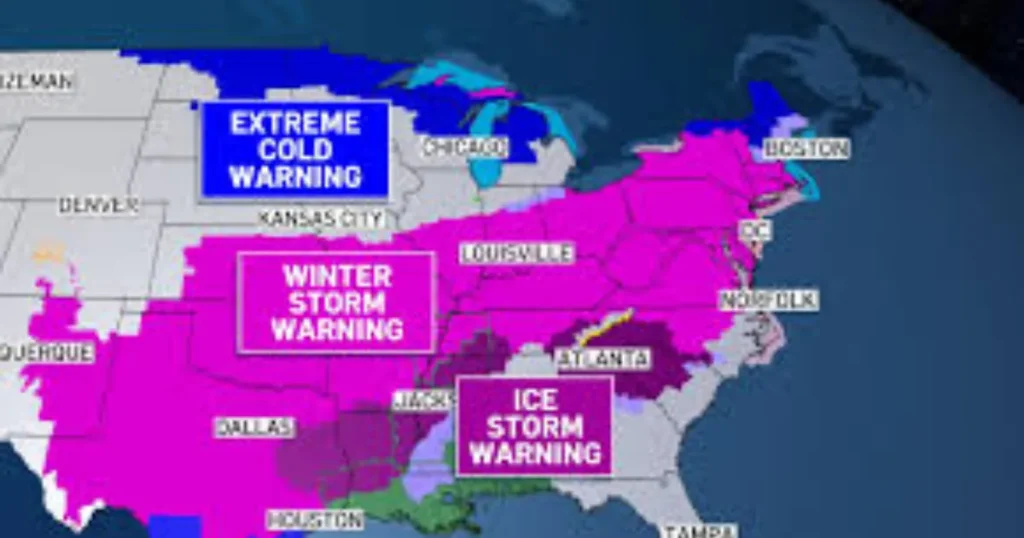
The National Weather Service (NWS) has issued heavy snow warnings across three states in the Northern Rockies — and some areas are bracing for up to two feet of snow paired with winds that could push visibility to near zero.
A powerful late-season winter system moved onshore over California before pushing steadily eastward, with forecasters warning that hunters, hikers, and snowmobilers face a genuine risk of becoming disoriented and lost due to drastically reduced visibility in blowing and drifting snow.
This isn’t a light dusting. This is a storm that demands your attention.
Heavy Snow Warning: Which States Are Under Alert Right Now?
The worst-affected locations appear to be Colorado and Wyoming, as areas within both states have been told to prepare for anywhere between 3 and 12 inches of snow by Sunday night or Monday morning. Montana is also in the crosshairs.
Here’s the state-by-state breakdown:
Wyoming 🏔️
Wyoming is expected to take a direct hit from the system, with the Cheyenne office of the NWS issuing a heavy snow warning for the Sierra Madre Range and Snowy Range, including the communities of Albany and Centennial. The most severe snowfall totals in the state are expected at Battle Pass, where forecasters are projecting up to 24 inches of accumulation.
In Wyoming, south central and southeastern areas — including the Sierra Madre and Snowy Ranges — are forecast to get between 6 and 12 inches of snow, especially across the higher elevations, with drivers warned to prepare for slippery road conditions along Interstates 25 and 90.
Colorado ⛰️
Colorado is facing a similarly serious situation, with areas under warning including Skyway, Crested Butte, Taylor Park, Marble, Monarch Pass, McClure Pass, Buford, Silverton, Molas Pass, Coal Bank Pass, Rico, and Hesperus — a list that underscores how broadly the storm is expected to spread across the state’s high-elevation terrain. Grand Mesa stands out as the location expected to see the heaviest totals, with projections reaching 24 inches.
In Colorado, parts of the south-central area — including the higher elevations of the eastern Sawatch and San Juan Mountains — could see between 5 and 10 inches of snow with winds reaching 45 mph until around midnight on Sunday.
Montana 🌨️
Montana is arriving at this latest storm already worn down by heavy snowfall earlier in the week, giving the state less buffer heading into the new accumulation.
Between 4 and 9 inches of snow is forecast for south-central and south-central-eastern parts of Montana, particularly the Pryor Mountains and the northern Bighorn Mountains near the Wyoming border.
Heavy Snow Warning: Where Did This System Come From?
The weather event is being driven by an upper-level energy system that moved onshore over California on Saturday before pushing steadily eastward, with forecasters expecting it to reach the Upper Midwest by Monday evening, bringing rain and embedded thunderstorms to parts of Northern California and Nevada along the way.
California’s Sierra Nevada mountains are used to this kind of assault. But when that same energy transitions into the Northern Rockies, it transforms into something far more dangerous at altitude.
Why This Matters Now: Spring Doesn’t Cancel Winter Dangers
We tend to let our guard down in April. Kids are back outside. Hiking trails are reopening. And that’s exactly when late-season storms catch people off guard.
The National Weather Service issues winter storm warnings when snowfall reaches levels that pose serious risks to life and travel — a community’s infrastructure and preparedness matter just as much as raw accumulation numbers.
For mountain communities, that threshold is lower than you think.
Roads can go from wet to treacherous in under an hour. Power lines snap under wet, heavy snow. Cell service drops in whiteout conditions. And in remote areas like Battle Pass or Grand Mesa, help is a long, dangerous drive away.
Officials urge motorists to plan for slower travel, use caution, and monitor conditions as snow continues to fall throughout the day — and if you must travel, keep an extra flashlight, food, and water in case of an emergency.
Where Is Heavy Snowfall in the USA Right Now?
The Mountain West is the primary zone of concern this week. But historically, the states that see the worst winter weather tell a familiar story:
Colorado averages over 300 inches of snow per year in its highest mountain towns like Silverton and Wolf Creek. Alaska dominates all-time records — Thompson Pass holds the US record for snowfall in a single season at 974 inches. In the lower 48, Utah, Montana, Wyoming, and northern New York (especially the Tug Hill Plateau near Lake Ontario) consistently rank among the snowiest regions.
The snowiest cities in the contiguous US include Syracuse, NY; Buffalo, NY; Flagstaff, AZ; Erie, PA; and Rochester, NY — all averaging over 90 inches annually. But it’s mountain communities in Colorado, Utah, and Wyoming where the heaviest single-storm totals typically fall.
As for the coldest city in the US? International Falls, Minnesota holds that title, routinely dipping to -40°F in January.
The 2026 Winter That Refused to Quit
This April storm is just the latest chapter in one of the most brutal winters on record.
From January 23 to 27, 2026, a massive winter storm unofficially referred to as “Winter Storm Fern” or “Snowmageddon” caused catastrophic ice and snow impacts from Northern Mexico to the Southern and Northeastern United States, encompassing a near 2,000-mile stretch of contiguous alerts affecting over 230 million people. By January 25, the number of counties under a winter storm warning was the highest ever recorded.
The storm impacted more than 20 states from New Mexico to Maine, dumping more than a foot of snow in some locations, with about 800,000 customers losing power — the most significant outages seen in Tennessee, Mississippi, and Louisiana.
Then came February. From February 22–24, a powerful historic blizzard caused extensive impacts across the Northeastern United States, dropping 1–2 feet of snow from Philadelphia to Boston, with up to 3 feet in southeastern New England, and bringing hurricane-strength wind gusts near 100 mph along the coastline.
And now, in late April, it’s still not over.
Frequently Asked Questions
Where is heavy snowfall in the USA right now? As of late April 2026, active heavy snow warnings cover Wyoming, Colorado, and Montana — particularly in high-elevation zones like the Sierra Madre, Snowy Range, San Juan Mountains, and Grand Mesa.
Where in America has snow now? Snow is currently falling or expected across the Northern Rockies. The Upper Midwest may also see impacts later this week as the system moves east.
Which state is getting the most snow? Wyoming’s Battle Pass and Colorado’s Grand Mesa are forecast to receive up to 24 inches from this system — the most extreme totals in the region.
Which states get the worst snow historically? Alaska leads all states. In the contiguous US, Colorado, Utah, Wyoming, Montana, and upstate New York consistently see the most severe snow seasons.
What are the top 5 snowiest cities in the US? Syracuse, NY; Buffalo, NY; Flagstaff, AZ; Erie, PA; and Rochester, NY top the annual averages. Mountain towns like Crested Butte, CO often exceed all of them in peak snowfall years.
What US state gets the worst winters overall? Alaska, by a wide margin. Among the lower 48, Minnesota, North Dakota, and Montana consistently experience the coldest, longest winters.
What is the coldest city in the US? International Falls, Minnesota — often called “the icebox of the nation” — holds the record for sustained extreme cold in the continental US.
What is the biggest snow in US history? Thompson Pass, Alaska recorded 974 inches in a single season. For a single storm, Mount Shasta, California received 189 inches in February 1959 — the largest single-storm snowfall on US record.
How much snow does Colorado get? Colorado’s high country averages 200–400 inches per season. Lower elevations like Denver see around 57 inches annually, while ski towns like Steamboat Springs or Crested Butte often exceed 300 inches.
Where has the heaviest snowfall? In the US, Alaska’s coastal mountain ranges top all records. In the lower 48, the Sierra Nevada (CA), Cascades (WA/OR), and Colorado Rockies produce the country’s heaviest snowfall totals.
Stay Safe — The Mountains Aren’t Forgiving in April
There’s something both beautiful and humbling about a late-season storm. It reminds us that no matter how confidently we flip the calendar page, nature writes its own schedule.
If you’re in Wyoming, Colorado, or Montana right now — check weather.gov for your exact location, delay non-essential travel in the mountains, and never assume a spring storm is a minor one.
The people who live in these communities know: the mountains demand respect in every season.


I am a content creator/ Digital Marketor.