The Silent Shift Toward AI-First Wearables
AI is no longer locked inside phones or laptops. It’s moving closer to our eyes. Smart glasses and XR (extended reality) devices are becoming the next personal screen, blending artificial intelligence with vision, sound, and movement. Unlike earlier wearables that felt experimental, today’s AI-driven devices focus on real use—navigation, communication, work, and daily decisions.
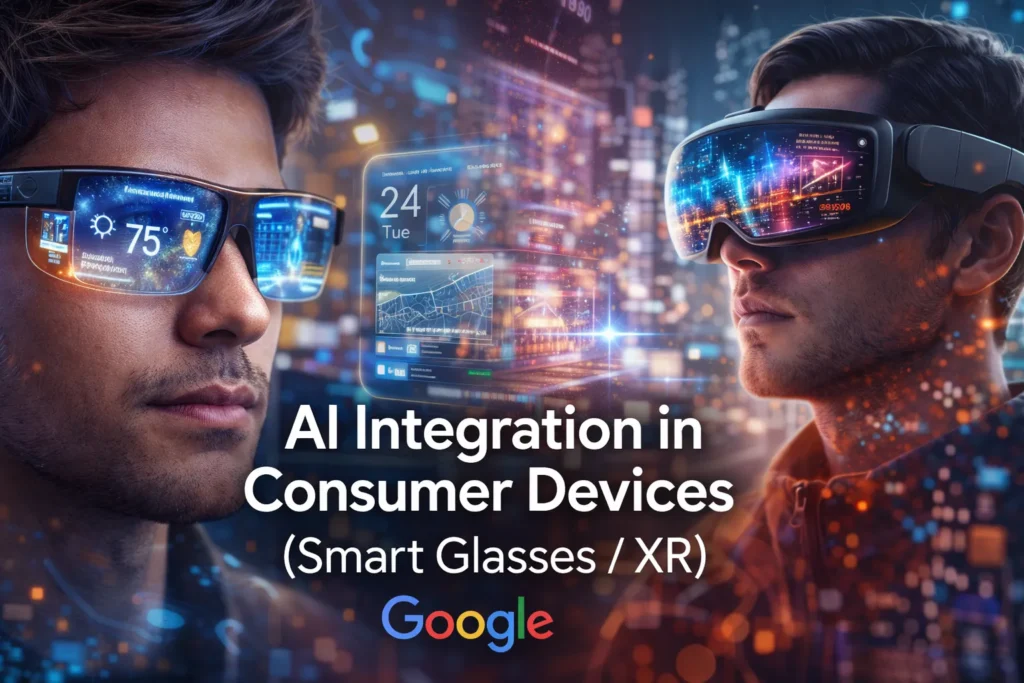
This shift matters because wearables change how people interact with technology. Instead of tapping or typing, users speak, look, and move. AI handles the rest in the background.
How AI Powers Smart Glasses and XR Devices
Computer Vision That Understands the World
Modern smart glasses rely on AI-based computer vision to identify objects, text, faces, and surroundings in real time. This allows features like instant translation of signs, product recognition, and visual search without pulling out a phone.
Context-Aware Voice Assistants
Unlike basic voice commands, AI in XR devices listens with context. It understands where you are, what you’re looking at, and what you might need next. Asking for directions, reminders, or information becomes natural and hands-free.
Spatial Intelligence for Mixed Reality
XR devices use AI to map physical spaces and anchor digital elements within them. This makes virtual screens, instructions, or 3D models feel stable and useful—especially in training, design, and remote collaboration.
Real-Life Uses Driving Adoption
Everyday Convenience
Users can read messages, answer calls, capture moments, or get alerts without breaking focus. AI filters what matters and ignores noise, reducing screen overload.
Work and Productivity
From technicians viewing repair steps overlaid on equipment to remote teams sharing virtual workspaces, AI-powered XR is becoming a practical work tool rather than a novelty.
Accessibility and Assistance
Smart glasses with AI support people with visual or hearing challenges through object descriptions, live captions, and audio cues, making technology more inclusive.
Why Consumer Adoption Is Growing Now
Earlier smart glasses failed because they lacked purpose and power. Today’s models succeed because AI runs efficiently on-device or through fast cloud connections. Battery life, design, and privacy controls have also improved, making these devices feel wearable—not intrusive.
Another factor is trust. Users now expect AI to assist quietly rather than interrupt. Smart glasses fit that expectation by staying in the background until needed.
What Comes Next for AI and XR
The future points toward lighter designs, better personalization, and deeper AI learning from daily habits. Smart glasses may soon act as a personal guide—anticipating needs, managing information flow, and blending digital support seamlessly into real life.