AI-Powered Cybersecurity Threats: The New Digital Arms Race
Cybersecurity is no longer a game of simple viruses and firewalls. Artificial intelligence has changed how attacks are created, scaled, and executed. Today’s cybercriminals use AI to move faster than human-led security teams, forcing businesses and individuals to rethink digital safety.
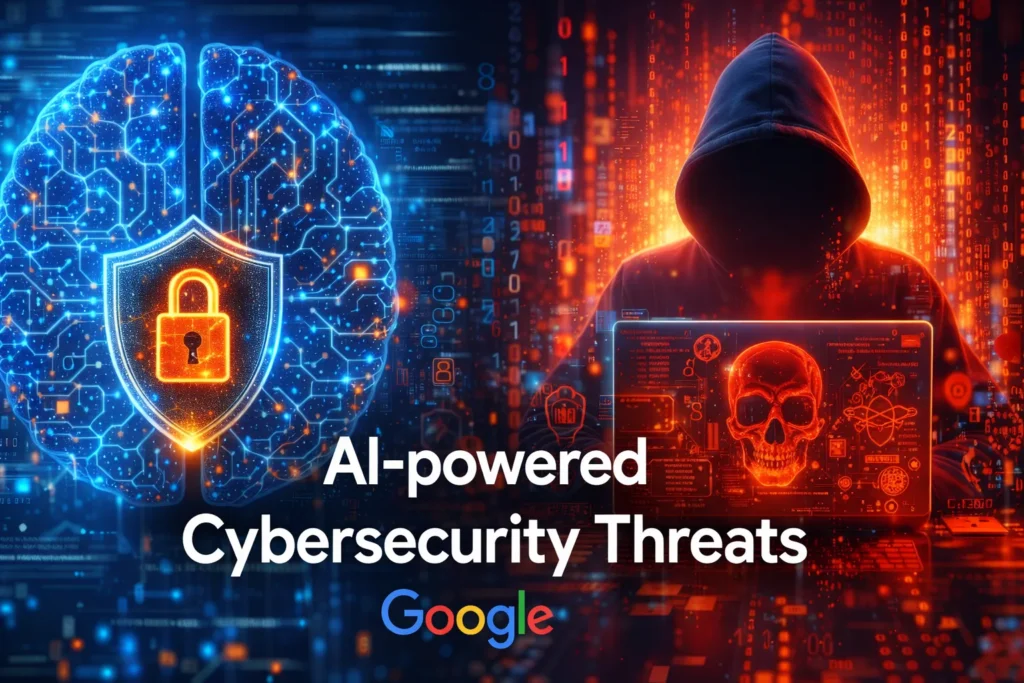
This shift has triggered a new arms race—AI versus AI—and the consequences are already visible across industries.
How AI Is Changing Cyber Attacks
AI allows attackers to automate tasks that once required skill, time, and manual effort. That single change has raised both the speed and volume of attacks.
Smarter Phishing and Social Engineering
Traditional phishing emails were easy to spot. AI-driven phishing is different. Language models now generate messages that sound natural, personalized, and context-aware. Attackers can tailor emails based on public data, job roles, or recent online activity, making scams harder to detect.
AI-Generated Malware That Adapts
Modern malware can now learn. Using machine learning, malicious software can adjust its behavior to avoid detection, pause when it senses monitoring, and change signatures to bypass antivirus tools.
This makes signature-based security almost useless on its own.
Deepfakes and Identity Exploitation
One of the fastest-growing risks involves AI-generated audio and video.
Voice and Video Spoofing
Attackers can clone voices or faces using short online clips. These deepfakes are already being used to:
Authorize fake payments
Impersonate executives
Bypass voice-based authentication
For organizations that rely on calls or video verification, this threat is serious and immediate.
Why Traditional Security Is Falling Behind
Most legacy security tools were designed for predictable threats. AI-powered attacks are dynamic.
Key Gaps in Older Systems
Rule-based detection reacts too slowly
Human monitoring cannot scale
Static defenses fail against adaptive malware
This gap explains why even well-funded companies still experience breaches.
How Defenders Are Fighting Back With AI
The solution is not avoiding AI—but matching it.
AI-Driven Cyber Defense
Security teams now use AI to:
Detect abnormal behavior instead of known signatures
Predict attack paths before damage occurs
Automate incident response in real time
Behavior-based monitoring and zero-trust architectures are becoming standard for organizations that want long-term protection.
What Businesses and Users Should Do Now
AI-powered threats are not future risks. They are active today.
Practical Steps
Use multi-factor authentication beyond SMS
Train staff to spot AI-enhanced phishing
Adopt behavior-based security tools
Verify sensitive requests through multiple channels
Cybersecurity is no longer only an IT issue—it is an operational priority.
Final Thoughts
AI has permanently reshaped cybersecurity. Attackers use it to scale deception, while defenders rely on it to predict and prevent damage. Those who fail to adapt will stay vulnerable.
In this new digital arms race, speed, intelligence, and adaptability decide who stays secure—and who gets breached.