Edge Computing and IoT: How Real-Time Data Is Powering Smart Systems
The growth of connected devices has changed how data is created and used. From smart homes to industrial sensors, billions of IoT devices generate information every second. Sending all this data to distant cloud servers often causes delays, higher costs, and security risks. This is where edge computing steps in, bringing processing closer to where data is produced.
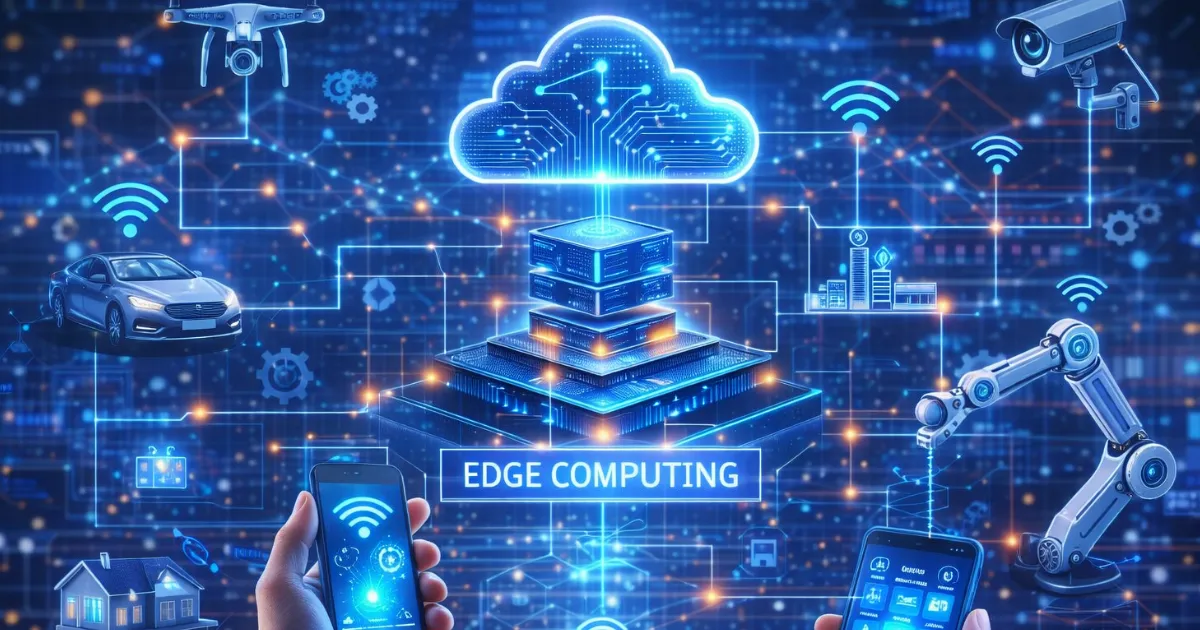
Understanding Edge Computing and IoT
Edge computing and IoT work as a team. IoT devices collect data, while edge systems process that data near the source instead of relying only on centralized cloud platforms.
What Is Edge Computing?
Edge computing is a model where data processing happens at or near the device that creates the data. This could be a local server, gateway, or even the device itself. By avoiding long data transfers, systems respond faster and use less bandwidth.
What Is the Internet of Things (IoT)?
IoT refers to physical devices connected to the internet that collect and exchange data. These include sensors, cameras, wearables, smart appliances, and industrial machines. Their value depends on how quickly and accurately their data is analyzed.
Why Edge Computing Matters for IoT
As IoT networks grow, edge computing becomes more important for speed, reliability, and control.
Faster Response Times
Many applications need instant decisions. Self-driving vehicles, factory robots, and health monitors cannot wait for cloud responses. Edge computing enables real-time action by processing data locally.
Reduced Bandwidth and Costs
Sending every data point to the cloud is expensive. Edge systems filter and analyze data first, sending only useful information to central servers. This lowers network load and operating costs.
Better Data Security
Sensitive data stays closer to its source. This reduces exposure during transmission and helps organizations meet data protection rules, especially in healthcare and finance.
Real-World Uses of Edge Computing and IoT
Edge-based IoT solutions are already shaping many industries.
Smart Cities
Traffic lights, surveillance cameras, and energy grids use edge processing to manage congestion, detect issues, and respond quickly to changing conditions.
Healthcare Monitoring
Wearable devices track vital signs and analyze data locally. Alerts can be triggered instantly without waiting for cloud analysis, which is critical during emergencies.
Industrial Automation
Factories use edge systems to monitor machines, predict failures, and maintain smooth operations. Local analysis prevents downtime and improves safety.
The Future of Edge Computing and IoT
As 5G networks expand, edge computing and IoT will grow even closer. Faster connectivity supports more devices, while edge intelligence handles complex tasks on the spot. This combination supports scalable, reliable, and responsive digital systems across sectors.
Final Thoughts
Edge computing and IoT are reshaping how data is handled. By moving processing closer to devices, organizations gain speed, efficiency, and control. As connected systems continue to expand, this approach will remain a key part of modern digital infrastructure.