

Nintendo Refuses to Pay $2 Million Ransom After Data Breach
Nintendo has officially responded to a 2millionransomdemandfromhackinggroupShadowByt3, confirming that a third-party vendor, TinyPulse, was compromised but refusing to meet the extortionists’ demands .

The Shocking Threat
Imagine waking up to find your private workplace survey responses, emails, and bank details held for ransom. That’s the unsettling reality Nintendo of America employees faced when ShadowByt3$ claimed to have stolen 859 MB of sensitive employee data . The hackers demanded $2 million to prevent the leak, giving the gaming giant a tight deadline . This is not the first time Nintendo has faced a security incident—a “gigaleak” previously exposed internal development data .
What Nintendo Said
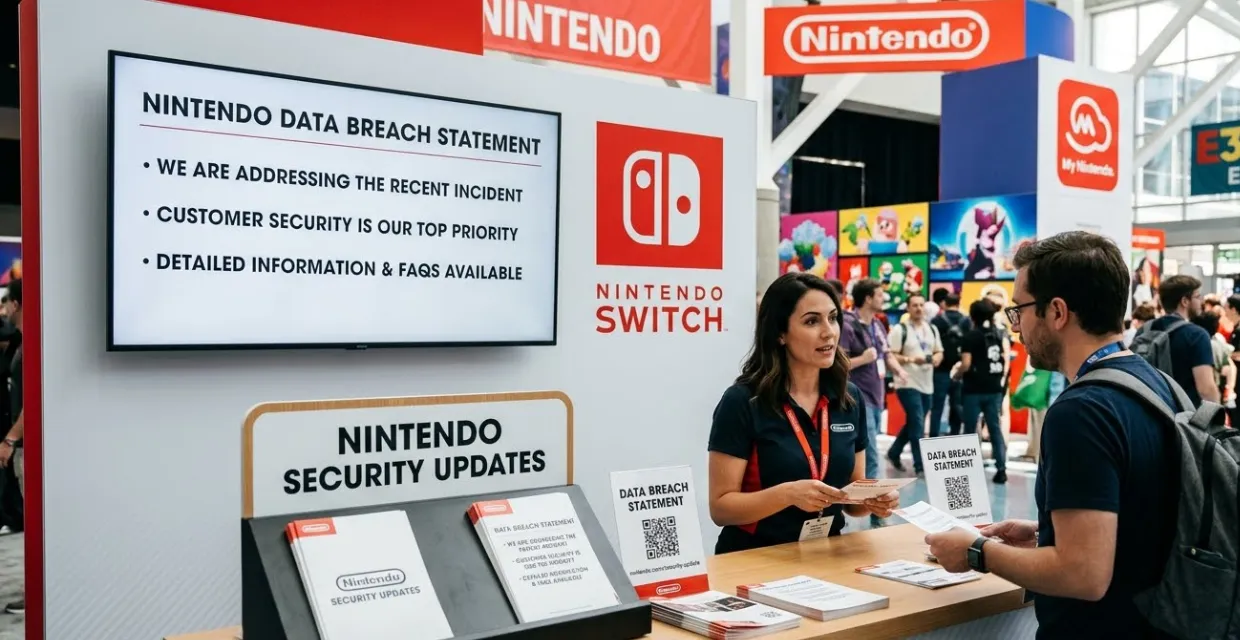
In its official Nintendo data breach statement, the company clearly stated that its own systems were not compromised. The issue lies solely with TinyPulse, a third-party platform used for collecting employee feedback .
Nintendo emphasized that no personal customer data, payment information, or financial data from players has been accessed . A spokesperson reassured users that “Nintendo’s systems have not been compromised,” and there is currently no evidence suggesting customer accounts were exposed .
Who Is Behind This Attack?
The group behind the attack, ShadowByt3$, describes itself as an “extortion as a service” operation . They allegedly targeted TinyPulse to access employee names, email addresses, survey responses, progress plans, bank records, and details on top-performing staff dating back to 2016 .
When Nintendo refused to pay the ransom, ShadowByt3$ reportedly pivoted to extorting TinyPulse itself, threatening to leak the data if the platform did not pay . However, the hackers may have accidentally exposed the download link for the stolen data in their own proof-of-breach screenshot .
What Was Exposed?
While the breach primarily involves employee survey data, some leaked screenshots have revealed interesting internal discussions. According to reports, the compromised data shows Nintendo employees expressing concerns about the company’s push for AI tools like Copilot, with staff worried about job security and the quality of “AI slop” .
Why This Matters Now
This incident highlights a growing cybersecurity trend: hackers targeting third-party vendors rather than attacking heavily protected corporate networks directly . As companies outsource more services—from HR to employee engagement—they create potential backdoors for cybercriminals.
For Nintendo, the breach also casts a spotlight on internal employee sentiment at a time when the gaming industry is grappling with layoffs, AI integration, and labor rights issues. One employee reportedly feared being “replaced by AI slop,” reflecting broader anxieties across the gaming sector .
The Takeaway
Nintendo is handling this breach with characteristic resolve: cooperate with the vendor, reassure customers, and refuse to give in to extortionists. Yet the incident serves as a sobering reminder that in the connected world, a company is only as secure as its weakest vendor.
For millions of Nintendo fans, the immediate concern is relief that their accounts, games, and payment details remain safe. But for employees, the anxiety of having private feedback exposed remains unresolved. The Nintendo data breach statement reassures users, but the true cost of this incident will be measured in the trust between the company and its workforce—and whether the industry heeds the warning to protect the human element behind the games we love.


I am a content creator/ Digital Marketor.