

One Click Wiped Her Life Savings
Sarah’s hands wouldn’t stop shaking.

She’d just checked her bank balance from a hospital waiting room. Her daughter was fine—a broken wrist from soccer. But her money? Gone. $50,000 vanished in twelve minutes.
All because she clicked a text that said, “Your package cannot be delivered: tap here.”
That was last Tuesday.
Today, she’s asking the same question you are: what is phishing—and why didn’t anyone warn her it feels this real?
The Hook You Never See Coming
Phishing isn’t a Nigerian prince email anymore.
It’s a voicemail saying your credit card was charged $3,000. It’s a LinkedIn message from “HR” with a PDF named Salary_Update.pdf. It’s an AI-generated voice clone of your CEO begging you to wire funds.
According to the FBI Internet Crime Complaint Center (IC3), phishing attacks surged 47% in the last year alone. The average victim loses $1,200. But the emotional cost? That’s what keeps victims awake at 3 AM.
“I felt violated. Not just robbed—tricked. Like someone laughed while I opened my own front door for them.” — Maria, phishing survivor (name changed for privacy)
What Is Phishing? (The Non-Boring Definition)
Let’s cut through the jargon.
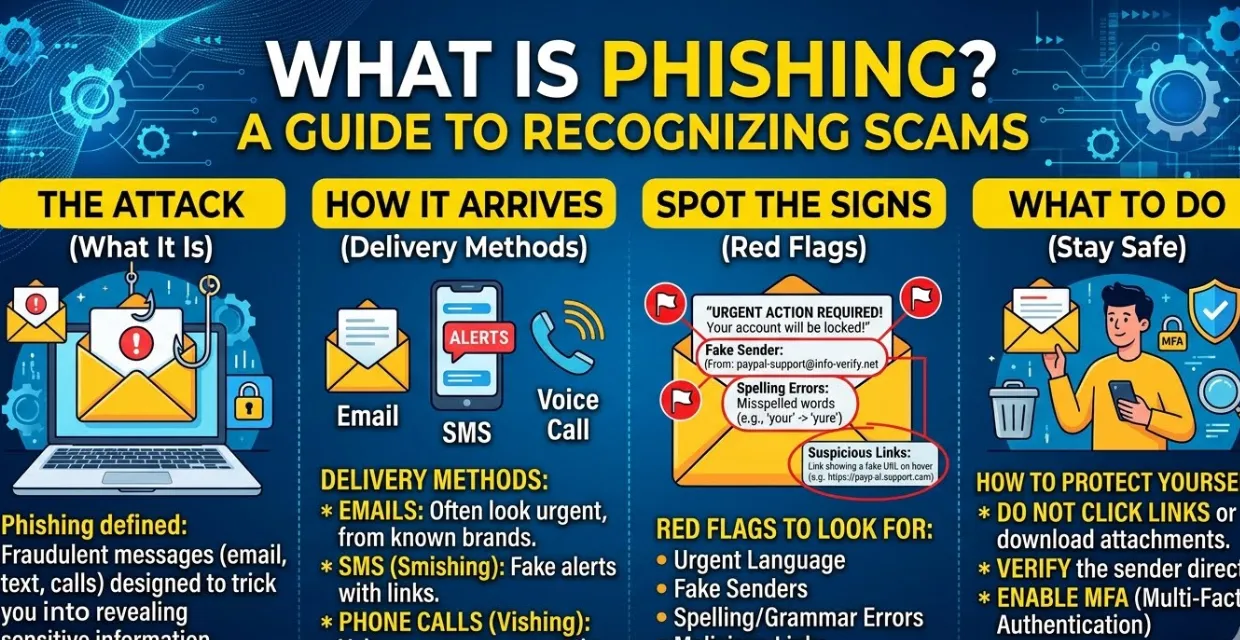
Phishing is digital manipulation. Criminals disguise themselves as someone you trust—your bank, your boss, even your mom—to steal passwords, credit cards, or access.
Think of it as identity theft with a mask.
Three Types You’ll Face This Week
1. Smishing (SMS + Phishing)
That fake delivery alert. The “your account is locked” text. Never click links from numbers you don’t recognize—even if they know your name. Data brokers sell that info for pennies.
2. Vishing (Voice + Phishing)
AI can now replicate a human voice with three seconds of audio. Scammers call pretending to be fraud departments. They’ll ask you to “verify” your social security number. Hang up. Call the real number on your card.
3. Spear Phishing
This is the scary one. Attackers research you—your job, your hobbies, your last vacation photo. Then they send an email so personal it feels impossible to fake. CEOs, journalists, and doctors are top targets.
Why This Matters Right Now
Tax season is open. Holiday shopping returns are flooding inboxes. And generative AI lets scammers write perfect, typo-free emails in any language.
The World Economic Forum just ranked phishing as the #2 cyber threat for 2025—above ransomware.
You are not paranoid. You are paying attention.
The Emotional Truth They Don’t Advertise
Shame is phishing’s secret weapon.
Victims don’t report it. They whisper to friends: “I can’t believe I fell for that.” But here’s what the data shows: even cybersecurity experts fail simulated phishing tests 20% of the time.
You are not stupid. You are human.
And humans trust. That’s beautiful. But in 2026, trust needs a second layer.
How to Spot the Trap in 5 Seconds
The “Slow Down” Test
If a message demands urgency (“act now,” “your account closes today”), stop. That’s not service. That’s a hostage situation.
The Hover Trick
On desktop, hover over any link without clicking. Does the real web address look like a cat walked on a keyboard? Run.
The Out-of-Band Call
Never use the phone number or email in the suspicious message. Look up the official contact info yourself. One extra minute saves months of regret.
Your Strong Takeaway
Sarah got most of her money back—the bank covered fraud after a six-week investigation. But she still double-clicks every sender address. She still teaches her teenagers to never scan unknown QR codes.
She told me: “I used to think what is phishing—some boring IT warning. Now I know it’s the difference between control and chaos.”
You will get a suspicious message today. Maybe this hour.
When you do, don’t feel fear. Feel power. Because you stopped to read this. You asked the question. And the single most dangerous click is the one you choose not to take.
Pause. Verify. Breathe.
That’s not paranoia. That’s 2026 street-smarts.

