Agentic AI & Foundations Explained
Agentic AI is quickly becoming one of the most talked about ideas in artificial intelligence. Unlike traditional AI systems that wait for instructions, agentic AI can decide, plan, act, and improve on its own within defined goals. In simple words, it behaves more like an independent digital worker than a basic tool. This shift is changing how businesses, developers, and researchers think about automation.
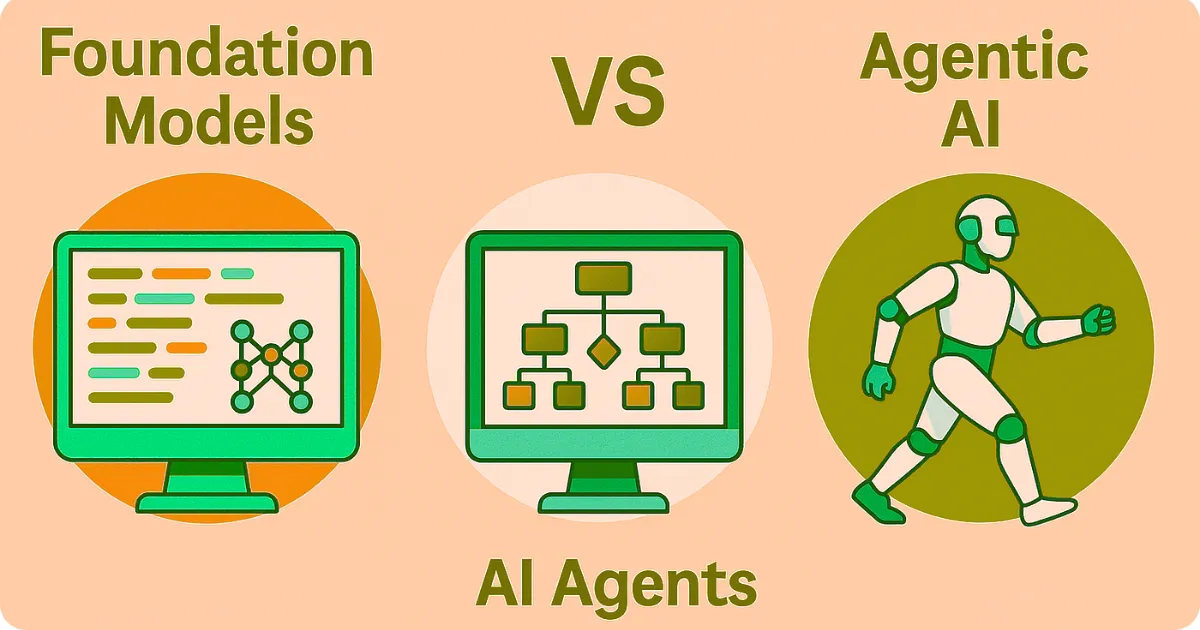
Let us break it down in a clear and practical way.
What Is Agentic AI?
Agentic AI refers to AI systems designed to operate as agents. These agents can understand objectives, break them into tasks, select tools, execute actions, and review results with limited human intervention. Instead of just answering questions or analyzing data, agentic AI takes initiative.
For example, an agentic AI system in marketing could analyze performance data, redesign ad copy, launch new campaigns, and adjust budgets without waiting for manual commands. It feels a bit strange at first, but this is where AI is heading.
Core Foundations of Agentic AI
Agentic AI stands on several critical foundations that make autonomy possible.
The first foundation is goal orientation. Agentic systems operate around a clear objective such as increasing sales, resolving customer issues, or optimizing operations.
Second is planning and reasoning. These systems do not jump into action randomly. They create step by step plans, evaluate options, and choose the most effective path forward.
Third comes tool usage. Agentic AI can interact with APIs, databases, software platforms, and even other AI models to complete tasks.
Another key foundation is memory and learning. Short term memory helps the AI track ongoing tasks, while long term memory allows it to improve over time based on previous outcomes.
Finally, feedback loops allow agentic AI to self correct. When results are poor, the system adapts its approach instead of repeating the same mistake again and again.
How Agentic AI Differs From Traditional AI
Traditional AI systems are reactive. They respond to prompts, commands, or fixed workflows. Agentic AI is proactive. It does not just answer, it acts.
This difference matters because autonomy reduces operational overhead. Teams spend less time supervising and more time focusing on strategy. Honestly, that alone is why enterprises are paying attention.
Real World Use Cases
Agentic AI is already being used in areas like software development, where AI agents write, test, and deploy code. In customer support, agents resolve tickets end to end. In finance, they monitor risks and execute predefined mitigation actions.
Healthcare, cybersecurity, and supply chain management are also seeing early adoption.
Risks and Responsible Foundations
With autonomy comes responsibility. Poorly designed agentic systems can act in unintended ways. This is why strong foundations like governance rules, human override controls, ethical design, and transparency are essential.
Organizations must define boundaries clearly. Agentic AI should act freely, but not blindly.
Final Thoughts
Agentic AI is not science fiction anymore. It is a natural evolution of intelligent systems driven by better models, stronger reasoning, and scalable infrastructure. The foundations matter as much as the intelligence itself. Without them, autonomy becomes risky.
If built responsibly, agentic AI can reshape how work gets done. And yeah, this change is already started, whether we like it or not.
