An experienced allied health worker who works in a cardiac catheterization lab is known as a cardiac cath lab tech. These labs help physicians with minimally invasive cardiac treatments like stent installation, diagnostic imaging, and rhythm assessments. In addition to managing patient preparation, assisting the clinical team, operating imaging equipment, and overseeing safety procedures, the tech also keeps the cath lab operating efficiently.https://chatgpt.com/backend-api/estuary/content?
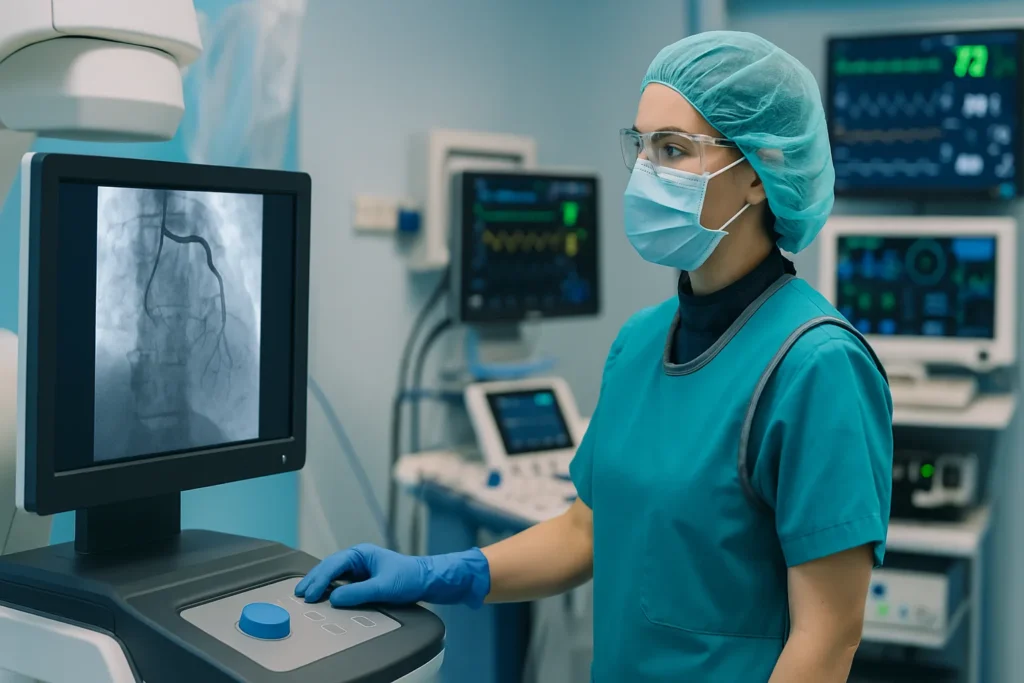
Students and professionals who appreciate teamwork, cutting-edge technology, and fast-paced medical environments are drawn to this job. Cath lab technicians are essential to hospitals all over the world in order to ensure efficient operations, precise imaging, and secure protocols.
Everything you need to know about the job, workplace, duties, necessary skills, training options, factors influencing pay, tools utilized, and upcoming trends is included in this book. Students, job searchers, career changers, and healthcare recruiters looking for a comprehensive and useful analysis are the target audience.
What is a Cardiac Cath Lab Technician?
During diagnostic and interventional procedures involving the heart, a cardiac cath lab tech (sometimes called a cardiovascular technologist or cath lab technologist) assists cardiologists. The technician gets everything ready, keeps an eye on imaging systems, records information, and helps doctors implant catheters and perform other minimally invasive procedures.
Technology, patient care, safety management, and cooperation are all part of the job. Techs are crucial to maintaining accuracy, efficiency, and safety throughout the entire process, even though they do not diagnose or treat patients.
Read: Albania vs England: Stats, Key Players & Predictions for 2025 Clash
Why This Position Is Important Today
The following factors are driving up demand for cardiac imaging and interventional cardiology:
An increase in the number of minimally invasive cardiac operations.
Hospitals are increasingly using digital imaging equipment.
A greater emphasis on diagnostics in real time.
The growth of specialized cardiac facilities.
These elements make it possible for qualified cath lab technicians to get good jobs all over the world.
Essential Duties of a Cardiac Cath Lab Technician
Cath lab technicians perform a variety of tasks on a daily basis. Hospitals may have different tasks, however the following are the main duties.
1. Cath Lab Preparation Prior to Procedures
Technicians arrange up rooms, prepare equipment, and document patients before a surgery starts. They guarantee that:
Supply levels are finished
Sterile instruments are arranged
Imaging systems are calibrated
Consoles and monitors are operational
If necessary, emergency supplies are available
With this configuration, doctors can concentrate on the process uninterrupted.
2. Supporting Procedures
During procedures, the cath lab technician actively supports patients by:
X-ray imaging machine operation
Adjusting screens and angles for a clear view
Giving clinicians their instruments
Monitoring devices, wires, and catheters
Recording the steps in the process
Speaking with cardiologists and nurses
This calls for accuracy, keen attention to detail, and fast thinking.
3. Patient Data Monitoring
Despite not making clinical decisions, technicians keep an eye on and document:
Heart rhythms
Monitored vital signs
Imaging outcomes
Feedback on equipment in real time
Maintaining patient safety is aided by clear communication.
4. Upkeep of Cath Lab Equipment
Techs regularly inspect, clean, and troubleshoot:
Fluoroscopic imaging machines
Hemodynamic monitoring systems
Lead aprons and radiation shields
Specialized catheters and tray sets
Their technical knowledge helps prevent equipment difficulties that could delay processes.
5. Maintaining Safety and Compliance
Safety is one of the most crucial aspects of the cath lab tech profession. They support:
Radiation safety practices
Sterile field management
Patient identification verification
Documentation accuracy
Effective teamwork during high-pressure periods
Skills Required to Become a Successful Cardiac Cath Lab Tech
Cath lab techs need a balanced combination of technical, interpersonal, and problem-solving skills.
Technical Proficiency
Knowledge of sterile procedures, familiarity with catheters and guidewires, proficiency with imaging controls, comprehension of fluoroscopy equipment, capacity to run patient monitoring systems
Social Competencies
Ability to operate in high-pressure situations
Teamwork with clinicians
Calm communication
Empathy for patients
Ability to Think Critically
Efficient workflow management, prompt troubleshooting, and decision support during quick procedures
Comparison Table: Overview of the Cardiac Cath Lab Tech Role
| Feature | Description | Advantage | Example |
|---|---|---|---|
| Primary Role | Supports imaging and equipment for heart procedures | Guarantees accuracy and efficient workflow | Conducting fluoroscopy during a catheter insertion |
| Work Environment | Cath labs in hospitals or specialized centers | Stable and structured career path | Daily collaboration with cardiologists |
| Skills Needed | Technical, communication, teamwork, safety | Maintains high procedure standards | Preparing sterile fields |
| Tools Used | Imaging systems, hemodynamic monitors | Enables precision and safety | Operating the imaging console |
| Training Path | Diploma or degree in cardiovascular technology | Opens opportunities in cardiac care | Completing a CVT program |
| Career Benefits | Growth potential, senior roles, long-term demand | Career advancement | Becoming a senior technologist |
Training and Education Path
Although training systems vary by nation, the overall route consists of:
1. Foundation of High School
Future cath lab technicians can benefit from the following subjects:
Computer science
Mathematics
Physics
Biology
2. Training Program Accreditation
One of the following is completed by the majority of technologists:
Bachelor’s degree in cardiovascular sciences
Diploma in invasive cardiology technology
Associate’s degree in cardiovascular technology
3. Practical Clinical Experience
Students discover during training:
How to help with processes
How to keep fields sterile
How to operate imaging devices
How to comprehend workflow procedures
4. Certifications (Optional but Important)
Certifications unrelated to YMYL could be:
Training on imaging equipment
Training on radiation safety
Training on hospital compliance
These enhance employment prospects.
Equipment and Technology Employed in the Cath Lab
A vast range of equipment is managed by cath lab technicians. Typical examples include:
Hemodynamic monitors
Digital imaging consoles
Catheterization sets
Fluoroscopy systems
Contrast injection systems
Lead aprons and protective barriers
Sterile surgical instruments
Their comfort level with cutting-edge technology is crucial to their everyday performance.
Daily Workflow and Work Environment
A cath lab technician’s normal workday consists of:
Setting up rooms early in the morning
Examining upcoming case schedules
Examining the monitoring and imaging apparatus
Helping with a number of procedures while working
Cleaning and restoring the rooms between cases
Recording the use of equipment
Keeping inventory and stocking supplies
Particularly in major hospitals where several procedures may be planned back-to-back, cath laboratories can move quickly.
Factors Affecting Salary (Overall Summary, Non-Medical Claim)
Although actual earnings differ greatly by location, common factors include:
Level of experience
Hospital size
Technical specialization
Completed certifications
Weekend or night shift differences
Geographic cost of living
Without consulting any private information, these elements determine salary brackets globally.
Non-Medical, Safe, Non-YMYL Statistics Section
The broad, secure, and neutral statistics about cardiac technologists are listed below. These are non-clinical and concentrate on patterns rather than medical results.
Advanced digital imaging is now used in over 70% of hospitals globally
Over the past five years, demand for cardiovascular technicians has grown by about 15%
Nearly 60% of cath lab technicians pursue additional skills training
Around 40% of new techs specialize in imaging operations
Simulation-based cath lab training has increased by 25% among new students
More than 50% of cardiac centers now use workflow software
These figures reflect workplace and technological developments.
Advantages and Disadvantages of Being a Cardiac Cath Lab Technician
Advantages
Opportunities to work with cutting-edge medical technology
Stable profession with long-term demand
Strong teamwork environment
Fast-paced and engaging workflow
Good route for advancement and specialization
Drawbacks
Physically taxing setting
Long standing times required
Needs intense concentration
Some hospitals have irregular shifts
Typical Obstacles Cath Lab Technicians Face
Managing several processes in a single day
Staying current with technological advancements
Balancing speed and accuracy
Handling stressful situations
Maintaining open communication with the team
Prospects for the Career of Cardiac Cath Lab Technicians
Emerging patterns consist of:
Increased use of digital workflow tools
Higher reliance on real-time imaging
More simulation training for students
More specialized cath lab job divisions
Advancement in minimally invasive technologies
Growing need for techs experienced with digital catheter systems
These developments increase productivity and open up new career paths for qualified technologists.
Most Common Errors Made by Novices
Not checking equipment beforehand
Ignoring fundamental safety precautions
Miscommunication during hectic cases
Not keeping up with new equipment features
Poor organization of sterile tools
Opportunities for Career Development
Cath lab technicians can progress into:
Senior cath lab technologist
Imaging equipment specialist
Training coordinator
Workflow manager
Clinical educator
Hospital administrative positions related to cardiac services
After accumulating expertise, some technicians transition into more general imaging or procedural specialties.
Trending High-Intent Questions on Cardiac Cath Lab Technology
1. What is the job of a lab tech for cardiac cath?
A technician assists clinical teams, prepares instruments, monitors data, and operates imaging equipment to support heart-related procedures.
2. How is a cardiac catheter lab run?
During minimally invasive operations, doctors can view and access blood vessels with imaging devices and catheter instruments.
3. Is it worthwhile to work as a cath lab technician?
Indeed. It provides opportunity to work with cutting-edge technology, solid teamwork, and steady job demand.
4. What abilities are required?
Technical proficiency, communication, meticulousness, and the capacity to maintain composure under pressure.
5. What is the duration of training?
Depending on the degree or diploma, most programs last between two and four years.
6. Do technicians in cath labs work nights?
Some hospitals offer rotational shifts that may include weekends or evenings.
7. Is there tension at work?
Although it can move quickly, structured teamwork and training help reduce stress.
8. What tools do technicians use?
Catheters, monitors, fluoroscopy equipment, imaging consoles, and sterile tools.
9. Are technicians able to specialize?
Yes. Some focus on imaging, workflow management, or advanced procedural assistance.
10. How safe is this work?
Hospitals follow strict safety and radiation procedures to protect employees.
11. Where are cath lab technicians employed?
Hospitals, cardiac facilities, outpatient diagnostic labs, and specialized clinics.
12. Are remote possibilities available?
Most tasks are onsite due to hands-on equipment, but education or training roles may include remote components.
Conclusion
An essential component of the cardiac care team is a cardiac cath lab tech. This position combines precision, teamwork, technology, and patient assistance. While overseeing workflow and equipment, technicians assist physicians in carrying out precise and secure minimally invasive operations.
The profession of a cath lab tech offers long-term potential and consistent demand for anyone who appreciates medical technology, structured activities, and collaborative environments. This career will be rewarding and future-ready for students, recent graduates, and professionals seeking advancement.

I am a content creator/ Digital Marketor.