iPhone Fold 2026: Specs, Release Date & Features Guide
Apple is finally stepping into the foldable phone world. The iPhone Fold, expected in 2026, promises to blend the power of a full iPhone with the versatility of a mini tablet. This new form factor could change how you use your phone every day – from multitasking on a bigger screen to slipping a compact device into your pocket.
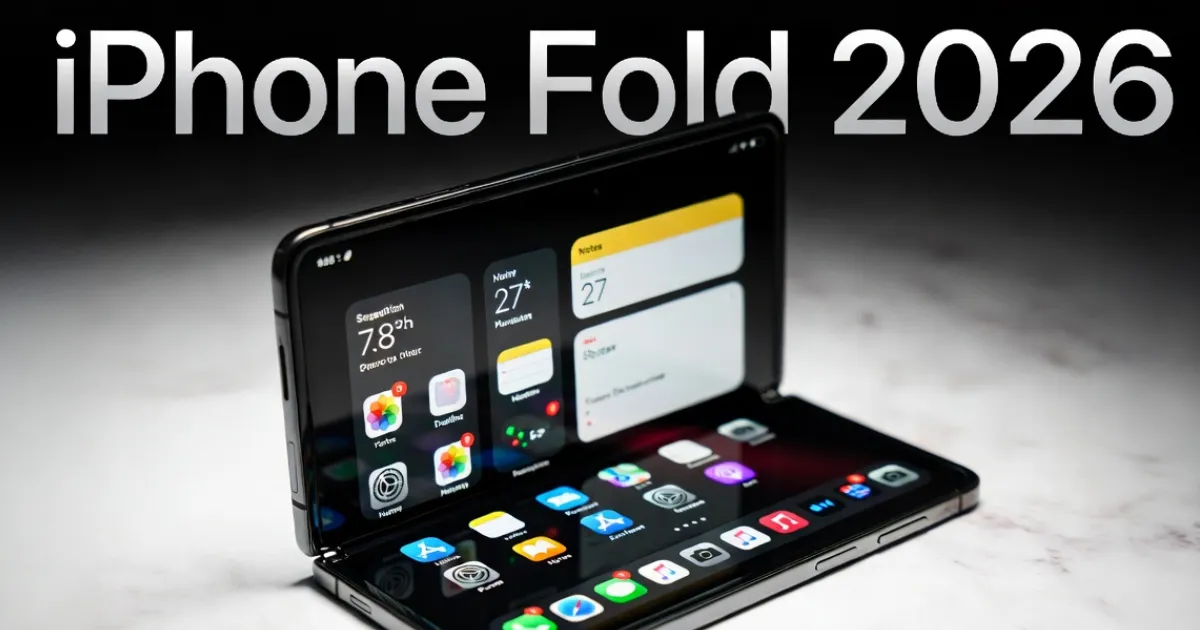
If you love the Apple ecosystem but want more screen real estate without carrying an iPad, the iPhone Fold matters. It brings Apple’s signature polish to a category dominated by Samsung and others. No more guessing about creases, durability, or software quirks. Apple takes its time, so expectations run high for a device that feels premium from day one.
This guide covers everything we know so far from reliable leaks and analyst reports. You’ll find clear details on design, specs, pricing, and real-world benefits. Whether you plan to upgrade or simply stay informed, read on for a straightforward look at Apple’s first foldable iPhone.
What Is the iPhone Fold?
The iPhone Fold is Apple’s first book-style foldable smartphone. Unlike clamshell designs that flip like old flip phones, this model opens like a book to reveal a larger inner display. When closed, it works like a regular iPhone. When open, it turns into a mini tablet perfect for reading, watching videos, or getting work done.
Apple has not officially named it “iPhone Fold.” Leaks suggest it might launch as iPhone Ultra or simply as part of the iPhone 18 lineup. For now, the industry calls it the iPhone Fold because it matches Samsung’s Galaxy Z Fold naming.
Why does this matter? Foldables solve a real problem. Traditional phones force you to choose between pocket-friendly size and big-screen productivity. The iPhone Fold gives you both. Close it for one-handed use. Open it for split-screen apps, note-taking, or immersive media.
Early rumors point to a premium build that feels like an iPhone Pro but with a fresh twist. Apple focused on making the crease almost invisible and the hinge rock-solid. This attention to detail sets it apart from current foldables that still show visible lines or feel fragile after heavy use.
Expected Release Date for the iPhone Fold
Apple plans to announce the iPhone Fold in September 2026 alongside the iPhone 18 Pro and iPhone 18 Pro Max. Mass production faced a short delay, shifting from June to early August 2026, but the launch timeline stays on track for fall.
Some analysts expect limited initial supply, with full availability possibly stretching into December 2026. This staggered rollout mirrors past launches like the iPhone X. You might see it announced in September but ship a few months later.
Pre-orders should open right after the keynote. If you want one early, mark your calendar for the usual Apple event window around September 8–10, 2026. Apple will likely stream it live on its website and YouTube.
This timing gives Apple time to refine software and hardware after years of testing. The company skipped earlier foldable attempts to avoid the durability issues that plagued first-generation competitors.
Design and Build Quality of the iPhone Fold
Apple designed the iPhone Fold with a book-style hinge. When closed, the phone measures roughly 5.5 inches tall and feels compact in your hand. Open it up, and the inner screen expands to about 7.8 inches – similar in size to an iPad mini.
The frame combines titanium and aluminum for strength without added weight. Rumors say the unfolded thickness hits just 4.5–4.8 mm, making it one of the thinnest foldables ever. Folded, it stays under 10 mm – still pocket-friendly.
A key highlight is the hinge. Apple uses advanced materials, possibly liquid metal, to create smooth movement and extreme durability. The goal is a nearly crease-free inner display. Early dummy models and leaks show a flat surface when open, unlike the noticeable valley on many Android foldables.
The outer display sits on the front cover. Expect a 5.5-inch OLED panel that works perfectly for quick tasks like texting, checking notifications, or taking photos without unfolding. A single hole-punch camera sits centered on the inner screen, a first for Apple.
No notch or Dynamic Island here. The lack of Face ID space leads to a side-mounted Touch ID button instead. Many users already prefer the reliability of fingerprint scanning, especially with gloves or wet hands.
Color options will likely include classic Apple finishes: black, white, titanium natural, and maybe a bold new shade. The overall look stays clean and premium, true to Apple’s design DNA.
Display Technology: Inner and Outer Screens
The inner 7.8-inch OLED uses a 4:3 aspect ratio, perfect for iPad-like productivity. Expect 120Hz refresh rate, HDR support, and peak brightness over 2000 nits for outdoor visibility.
Apple worked hard on the folding glass. Leaks mention ultra-thin glass layered over a flexible substrate. The result? Minimal crease even after thousands of folds. This tech matters because a visible crease distracts during movies or reading.
The outer 5.5-inch screen uses the same high-quality OLED. It runs at full resolution and supports Apple Pencil-like stylus input on some models, opening new creative possibilities.
Both screens integrate seamlessly with iOS. Apps resize automatically when you open or close the device. You can start a task on the outer screen and continue it larger inside without losing progress.
Rumored Specs and Performance
Inside, the iPhone Fold packs Apple’s A20 chip, built on a 2nm or 3nm process. This delivers faster performance and better efficiency than the A19 in regular iPhones. Expect 12GB of RAM to handle heavy multitasking across both screens.
Storage starts at 256GB and goes up to 1TB. No microSD slot, of course – Apple sticks to its ecosystem.
The C2 modem brings improved 5G speeds and better battery efficiency. Wi-Fi 7 and ultra-wideband support round out connectivity.
Camera System
Apple opted for a dual 48MP rear camera setup instead of the usual triple lens. One main sensor and one ultrawide cover most needs. The missing telephoto might disappoint some, but software enhancements and larger sensors should deliver excellent results.
An under-display camera on the inner screen plus a front punch-hole camera handle selfies and video calls. Expect 4K video at 120fps, ProRes, and all the computational photography magic Apple perfected over years.
Battery Life and Charging
The iPhone Fold boasts one of the largest batteries in any iPhone – around 5,400 to 5,800 mAh. The bigger inner screen and thin body require efficient power management, but the A20 chip and optimized iOS should deliver all-day use even with heavy multitasking.
Wireless charging and fast wired charging (likely 25–35W) return. Apple may include a larger MagSafe accessory optimized for the foldable shape.
Software: iOS Enhancements for Foldables
iOS 27 brings big changes tailored for the iPhone Fold. Expect native split-screen multitasking, drag-and-drop between apps, and better Stage Manager support.
Apple optimized apps like Safari, Notes, and Messages to take full advantage of the larger canvas. You can run two apps side by side or even three in some cases.
Continuity features shine here. Start an email on your Mac and finish it on the unfolded iPhone Fold. Handoff works smoother than ever across the dual screens.
Developers already received tools to make their apps fold-ready. Popular apps will feel native on day one.
Comparison Table: iPhone Fold vs. Leading Foldables
Here’s a clear side-by-side look at how the rumored iPhone Fold stacks up.
| Feature | iPhone Fold (Rumored) | Samsung Galaxy Z Fold 8 | Benefit to User | Example Use Case |
|---|---|---|---|---|
| Inner Display | 7.8-inch OLED, nearly crease-free, 4:3 ratio | 8.0-inch OLED, visible crease | Smoother viewing experience | Reading books or editing photos without distractions |
| Outer Display | 5.5-inch OLED | 6.5-inch OLED | More compact when closed | Quick replies while walking |
| Thickness (Unfolded) | ~4.5–4.8 mm | ~5.9 mm | Easier to slip into tight pockets | Daily carry without bulk |
| Processor | A20 chip | Snapdragon 8 Elite Gen 5 | Superior efficiency and Apple ecosystem integration | All-day battery with heavy AI tasks |
| RAM | 12GB | 12–16GB | Smooth multitasking | Running multiple apps side-by-side |
| Rear Cameras | Dual 48MP | Triple (200MP main + ultrawide + telephoto) | High-quality results with simpler hardware | Everyday photography without switching lenses |
| Biometrics | Touch ID (side button) | Under-display fingerprint + face unlock | Reliable in all conditions | Unlocking with wet hands or gloves |
| Battery | ~5,500–5,800 mAh | ~5,000 mAh | Longer usage between charges | Full day of video calls and productivity |
| Price (Starting) | ~$1,999–$2,399 | ~$1,999 | Premium but competitive | Long-term value with Apple support |
This table shows Apple’s focus on refinement over raw specs. The iPhone Fold trades some camera versatility for thinner design and better integration.
Foldable Smartphone Market Statistics
The foldable market is growing fast. According to industry reports, global foldable smartphone shipments grew 28% in 2025. Projections for 2026 show 20–30% year-over-year growth, driven largely by Apple’s entry.
Analysts expect Apple to capture over 22% of unit share and 34% of market value in its first year. Book-style foldables (like the iPhone Fold) could reach 65% of all foldable shipments by the end of 2026.
In the US, foldable adoption continues to rise as consumers seek versatile devices. North America saw strong double-digit growth in 2025, and experts forecast similar trends through 2026 and beyond.
These numbers highlight why Apple waited. The company enters a maturing market ready for premium, reliable options.
Pros and Cons of the iPhone Fold
Pros:
- Ultra-thin and light design feels premium in hand
- Nearly invisible crease improves media and reading
- Excellent iOS multitasking tailored for dual screens
- Strong battery life for all-day use
- Seamless Apple ecosystem integration
- Durable titanium build built to last
- Touch ID offers reliable security
Cons:
- High starting price may limit early buyers
- Dual cameras instead of triple (no dedicated telephoto)
- Initial supply could be limited
- Touch ID instead of Face ID (some users prefer face unlock)
- Early software may need updates for full optimization
Apple’s track record suggests these cons will shrink quickly with software updates and future generations.
Trending FAQs About the iPhone Fold
What is the iPhone Fold exactly?
The iPhone Fold is Apple’s first book-style foldable smartphone. It opens to reveal a larger tablet-like screen while staying compact when closed.
When will the iPhone Fold release?
Apple plans to announce it in September 2026. Availability may start in September or December 2026 depending on production.
How much will the iPhone Fold cost?
Expect a starting price around $1,999 to $2,399. Higher storage tiers will cost more.
Does the iPhone Fold have a visible crease?
Rumors say no. Apple engineered a nearly crease-free display using advanced materials.
Will the iPhone Fold support Apple Pencil?
Early leaks suggest stylus support on the inner screen, similar to iPad models.
How does the iPhone Fold compare to Samsung Galaxy Z Fold?
The iPhone Fold is thinner, has a better crease-free display, and offers tighter iOS integration, while Samsung provides more camera options.
Is the iPhone Fold worth waiting for?
If you want a premium foldable that feels like a true Apple product with long software support, yes. Current foldables are good, but Apple’s polish could make the difference.
What about durability and hinge life?
Apple tested the hinge extensively. Expect it to handle hundreds of thousands of folds without issues.
Will it have Face ID or Touch ID?
Touch ID on the side button. No Face ID due to the folding design.
What software features does it bring?
iOS 27 adds split-screen multitasking, better app resizing, and enhanced Stage Manager for the larger display.
Any beginner mistakes to avoid with foldables?
Don’t force the hinge, clean the screen gently, and use a proper case. Start simple with one app before diving into multitasking.
What are future trends for Apple foldables?
Later models may add tri-fold designs or even thinner profiles. Apple could expand the lineup to include a smaller clamshell version by 2028.
How does battery life compare to regular iPhones?
The larger battery should match or exceed iPhone 18 Pro Max usage despite the bigger screens thanks to efficient chips.
Conclusion
The iPhone Fold 2026 represents more than just a new phone. It marks Apple’s serious commitment to foldable technology done right. With a thin design, nearly crease-free display, powerful A20 chip, and thoughtful software, it addresses the biggest pain points of current foldables.
If you crave productivity on the go without sacrificing portability, this device could become your daily driver. The ecosystem benefits alone make it appealing for longtime Apple users.
While we wait for the official reveal, the rumors paint an exciting picture. Apple rarely rushes into new categories, and the care shown in these leaks suggests the iPhone Fold will set a new standard.
Ready to upgrade? Keep an eye on September 2026. In the meantime, explore current foldables to decide if the wait is worth it for you. The future of phones is folding – and Apple is ready to lead the way.

I am a content creator/ Digital Marketor.