The PS1 Console You Could Hold in Your Hands
Imagine holding a standard PlayStation controller—but it contains an entire gaming console. No bulky box. No complex setup. Just plug it into your TV and play.
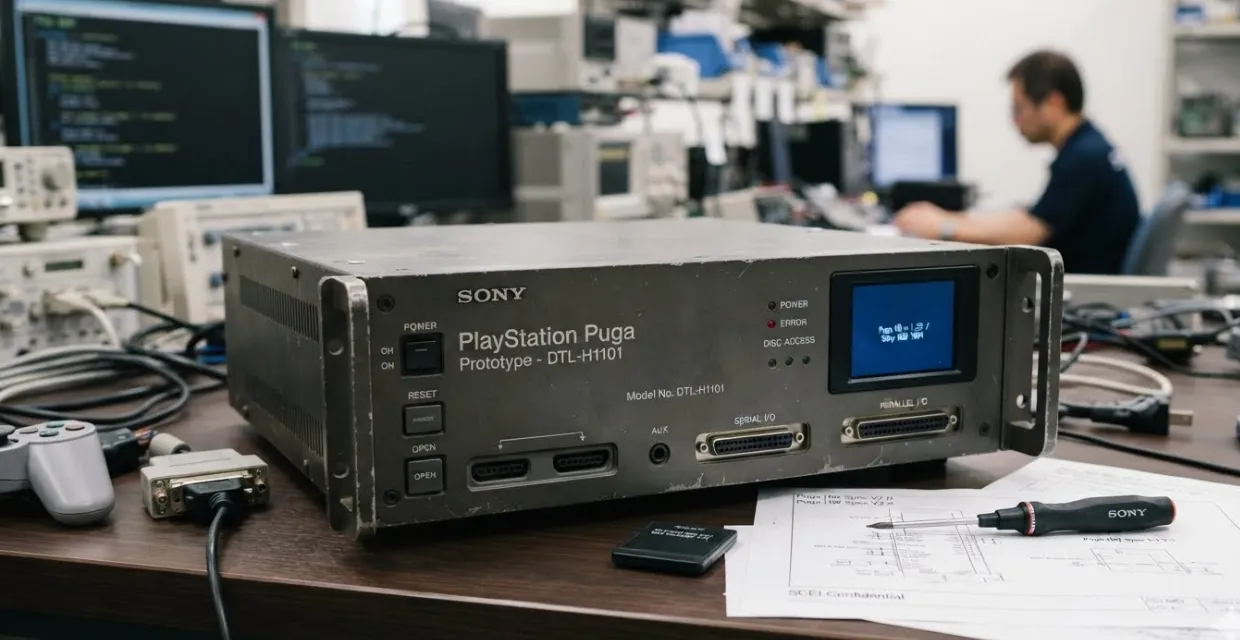
playstation puga sony prototype
Sony nearly made this a reality. And then they killed it.
The PlayStation PUGA prototype represents one of gaming’s most fascinating “what if” stories—a technical triumph destroyed not by hardware failure, but by corporate politics and licensing disputes .
What Was the PlayStation PUGA?
The PlayStation PUGA wasn’t a new console. It was something far more ambitious: a full PlayStation 1 crammed inside a DualShock controller.
Veteran developer Brian “Biscuit” Watson recently revealed details about this canceled project on The Retro Collective YouTube channel . The prototype was designed specifically for Brazil, where import restrictions made traditional consoles expensive and difficult to obtain .
Key specifications included:
TI OMAP 3530 processor running at 650MHz
4GB storage holding approximately 10 games
AA battery power delivering 20 hours of gameplay
Composite AV output for TV connection
SD card slot for game storage
According to Watson, the prototype worked remarkably well. The ARM-based architecture handled PS1 emulation smoothly, making it technically ready for market .
Why Sony Pulled the Plug
Here’s where the story gets painful.
The PUGA wasn’t canceled because it didn’t work. It was canceled because Sony couldn’t agree on royalties with game publishers .
The licensing division faced multiple obstacles:
Third-party publishers like Rockstar demanded high royalty rates
Sony’s own first-party teams had to negotiate with an internal licensing unit
That internal unit was “never happy” about the proposed royalties
The device was designed to be affordable—which meant profit margins were razor-thin. Sony estimated they would make only 10 cents per unit in royalties . At that price, publishers couldn’t agree to terms, and Sony’s internal departments couldn’t settle either.
“We couldn’t get our act together,” Watson reportedly said. Even Sony’s own games required inter-departmental negotiations that repeatedly failed .
Why This Matters Now
This story resonates today because it reveals something fundamental about the gaming industry: technical brilliance means nothing without business alignment.
Sony built a device that worked. It ran games well, lasted 20 hours on batteries, and could have expanded gaming access in emerging markets . But the project collapsed over ten cents per unit .
The PUGA could have been the PlayStation Classic before the PlayStation Classic existed—a portable, affordable way to experience PS1 games . Instead, it became another canceled prototype, joining the ranks of gaming’s lost what-ifs.
Interestingly, the project wasn’t entirely wasted. The emulator developed for PUGA eventually found its way into the Sony Xperia Play smartphone . So while the hardware died, the software lived on—just in a very different form.
The Legacy of a Canceled Dream
Every gamer knows the feeling of losing something that never existed. The PlayStation PUGA is that feeling made real.
Here was a device that worked. A portable PS1 you could hold in your hands. A plug-and-play solution for gamers in markets where consoles were too expensive. And it was destroyed not by engineering flaws, but by internal bureaucracy .
Sony’s licensing division couldn’t agree with Sony’s own studios. Think about that irony. A company couldn’t license games from itself.
The PUGA serves as a reminder: great ideas die for boring reasons. Not because they don’t work. Not because consumers wouldn’t want them. But because the people in charge can’t agree on money .
FAQs
What is the PlayStation PUGA?
The PlayStation PUGA was a prototype controller with an entire PS1 console built into it. Sony designed it for the Brazilian market to bypass import restrictions, allowing players to connect it directly to TVs and play games without a separate console .
Why was the PlayStation PUGA canceled?
Sony canceled the PUGA due to licensing disputes. Third-party publishers demanded high royalties, and even Sony’s own internal divisions couldn’t agree on revenue-sharing terms. With the device priced affordably, the 10-cent-per-unit royalty rate made deals impossible .
Who revealed the PlayStation PUGA?
Veteran game developer Brian “Biscuit” Watson, who worked on the project, shared details on The Retro Collective YouTube channel in July 2026. He demonstrated the prototype hardware and explained the licensing issues that killed it .
What happened to the technology used in the PUGA?
The emulator developed for the PUGA later appeared in the Sony Xperia Play smartphone. While the controller prototype never reached stores, its software had a second life on mobile devices .
Would the PUGA have been successful?
Technically, the prototype worked exceptionally well. It ran PS1 games smoothly and had impressive battery life. However, licensing obstacles and internal disagreements made the project unfeasible. Whether it would have succeeded commercially remains speculation.

I am a content creator/ Digital Marketor.